When you study educational administration and management, which I do, you often come across the work of Niccolò Machiavelli (1469-1527), who wrote The Prince (1532) and other ‘handbooks’ for leaders. “Avoid inconsistency,” we are urged, and “always mask your true intentions” when trying to achieve a specific outcome. Most of my students are aspiring principals, and I advise them to say yes to the former and no to the latter, but to be aware of this habit among superintendents and other senior educators. The leader of a school is seldom in the position of being The Prince, but more often reports to one.
To that end, I advise them to read another Italian from the same period, Baldassare Castiglione (1478-1529). Five hundred years ago, in 1524, he was posted as the Vatican’s ambassador to the Court of Emperor Charles V of Spain. Here he wrote The book of the Courtier (1528), which describes how one might best behave in the presence of Princes. The trick, says Castiglione, is to be so good at your job that it seems completely natural.
As my wife, Sally, is fond of saying whenever she concocts some elaborate four course meal for 8 guests, “it was no trouble”.
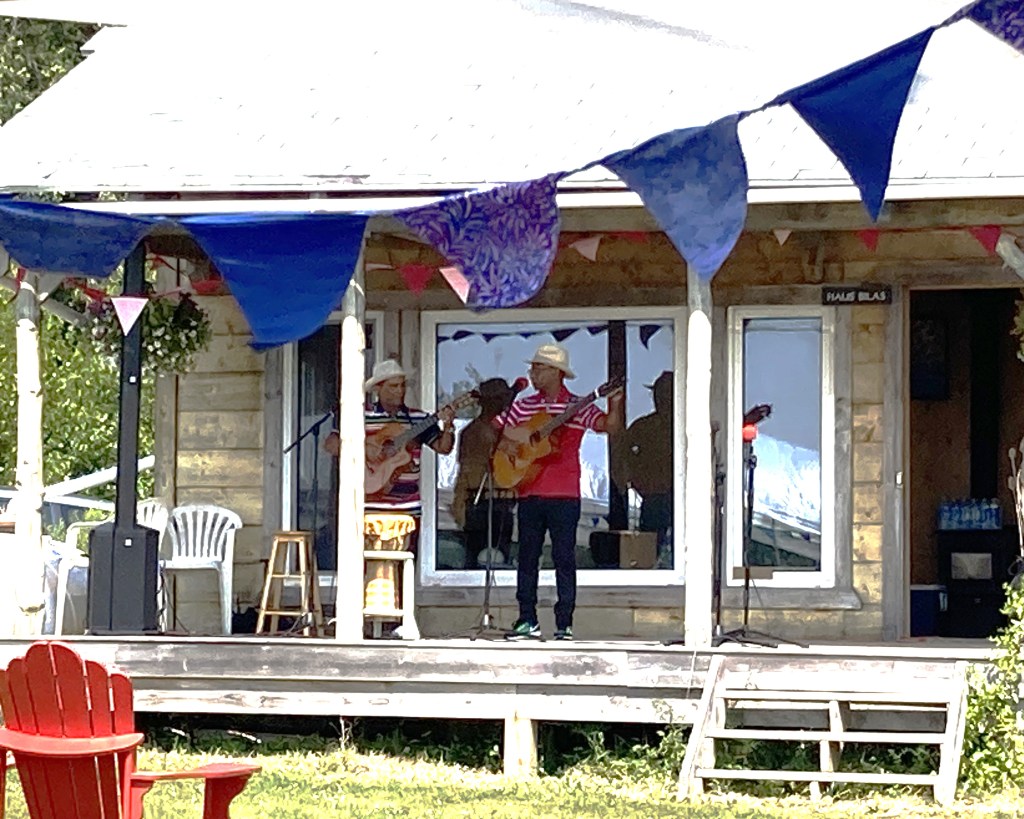
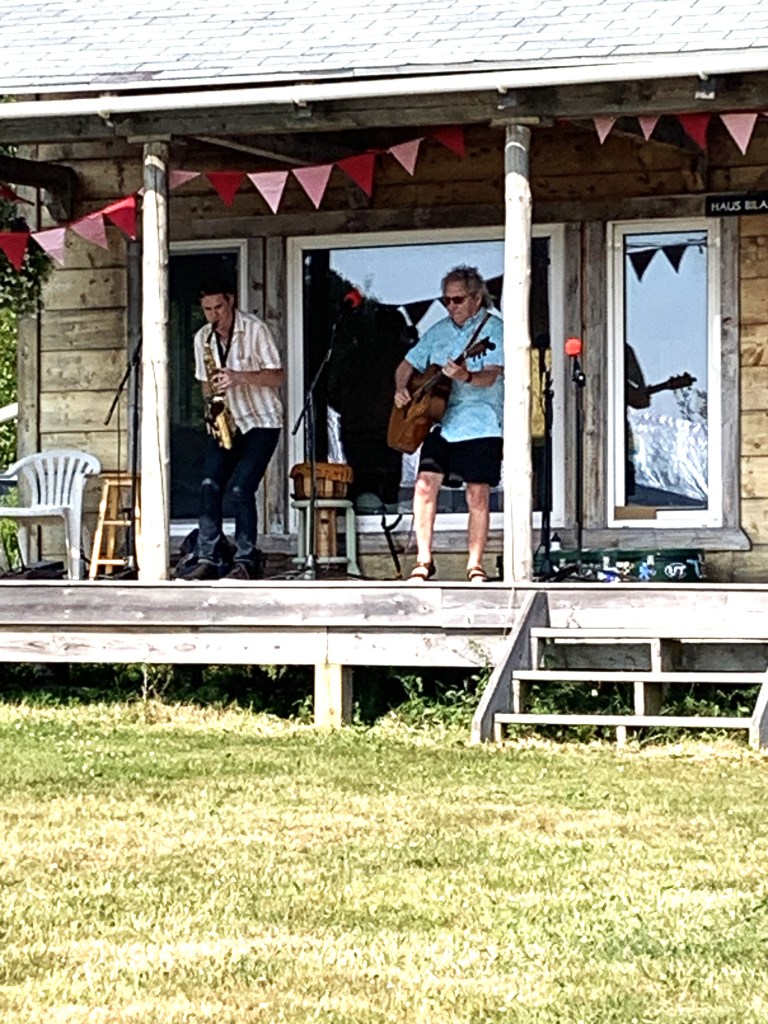
This is sprezzatura, the art of effortless grace, of making the difficult look easy, but doing so in a manner that is nonchalant and almost without thought, rather than contrived or calculated. I was reminded of this last weekend, when we had the 8th Annual Garden Party. It was a gorgeous day and there was a crowd of around 100 guests who enjoyed perfect weather, wonderful music, and a Strawberry Social from the local Women’s Institute … oh, and flowers … lots of flowers!
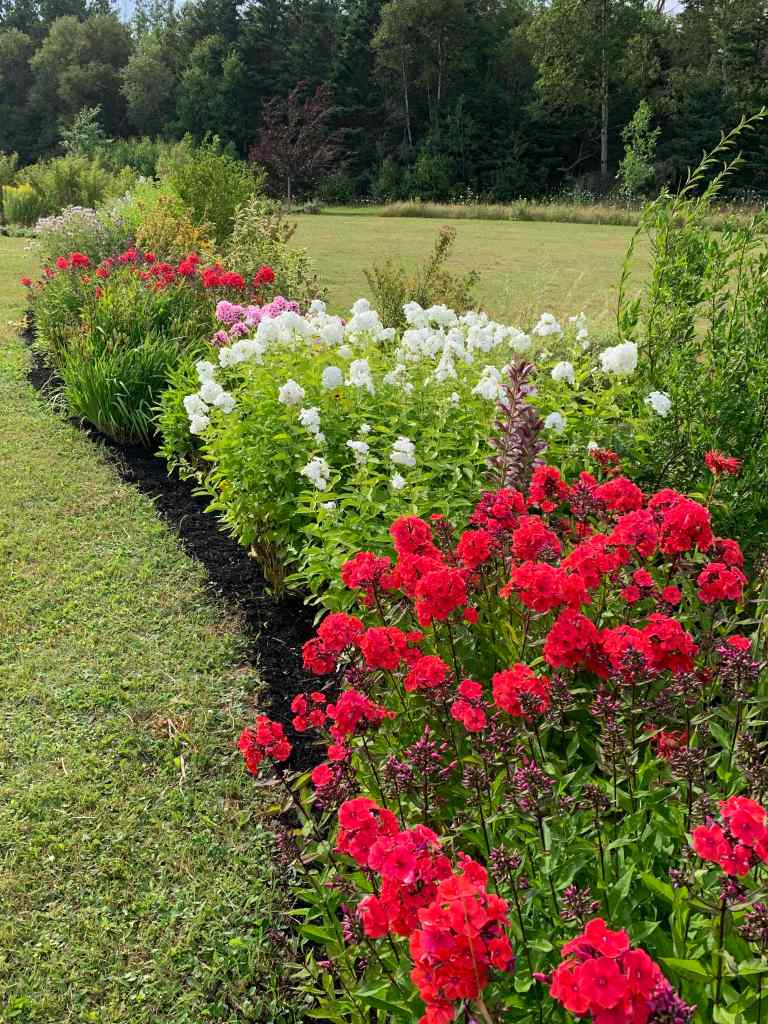

Due to my recent medical tribulations, I was a bit place bound this year, not able to wander around as much as I normally do. “Sit in a chair and let people come to you,” I was instructed, and that’s what I did for the most part. On balance, I’d much prefer to be wandering, but the new regime worked out alright. I managed to chat with nearly everybody, and it was wonderful to have people there who represented the full gamut of my academic life. “What a brilliant afternoon,” they said. “What an amazing event. … What a beautiful garden. … What incredible music.”
“It was no trouble,” I said.
And yet, and yet …
The planning started eight months ago, at the beginning of the year, when I wrote to everyone whose name I could find in my address book. If you didn’t hear from me, but receive this blog, please connect with me privately as I must have somehow misplaced your e-mail address. As I’ve mentioned before, 2024 marks the 50th anniversary of me receiving my teaching certificate, and my hope was to bring people together from across those years. Some, I hoped, would be travelling from off-Island, and so I wanted them to have the opportunity to book early. The accommodation and car rental markets here can be a bit tight in high summer, when our Island of around 175,000 people receives 1.6 million visitors.
Once the invitations were sent out, I set about finding the musicians. Great musicians are busy people, and you need to get in their calendars very early on. Even then it doesn’t always work. In the early 1970s I was the Social Secretary for the Hockerill College Student Union, and we booked the Bay City Rollers to play at one of our dances. This was just before they became famous. Three weeks before the event, they were on Top of the Pops, and the next week I was told that they had ‘medical issues’ and couldn’t meet their contractual commitment. There was no internet back then so I couldn’t ‘Google it’, but I phoned around and – surprise, surprise – found they were now headlining a major concert in Hammersmith. I sued, of course, and we got a double-fee reimbursement, but then had to scramble to find a last-minute substitute for our dance. On the Island, I can use a handshake and be confident that the band will turn up.
The snow began to melt as the responses to my invitation began to arrive, and I began to be a bit concerned at the amenities in the garden. In previous years people had brought their own chairs or had simply sat around on the grass, and those who were ‘caught short’ either went for a discreet walk in the woods or ran up to Victoria’s house to use her facilities. But this year I was inviting lots of people of my age and older, and I knew from personal experience that access to shade and toilets would be an important convenience. Portapotties were east enough to get. A man at Sally’s bridge club had a similar thought and mentioned that he knew a man who might be able to provide tents. I connected with Dan and Phyllis, who turned out to be veterans of the Canadian Armed Forces now living on PEI. They knew our story, and the tents were booked, together with chairs and tables.
With shade and toilets in place, we recognized that we were going to need some help in the garden and started our annual search for a summer assistant. As is the case across Canada, the issue of reliable workers for farms, gardens, and other outdoor endeavours is problematic. The Atlantic provinces have the highest rates of seasonal workers and yet according to Statistics Canada, the seasonally adjusted unemployment rate for PEI was 8.0 percent. We were so fortunate to find Karmyn, who will graduate from high school this year, lives nearby, and loves working in the garden. She helped with weeding, planting, pruning and general upkeep, and her value increased exponentially after I got sidelined at the end of June. She’ll be off to college at the beginning of September, and I just hope she wants a summer job again next year!
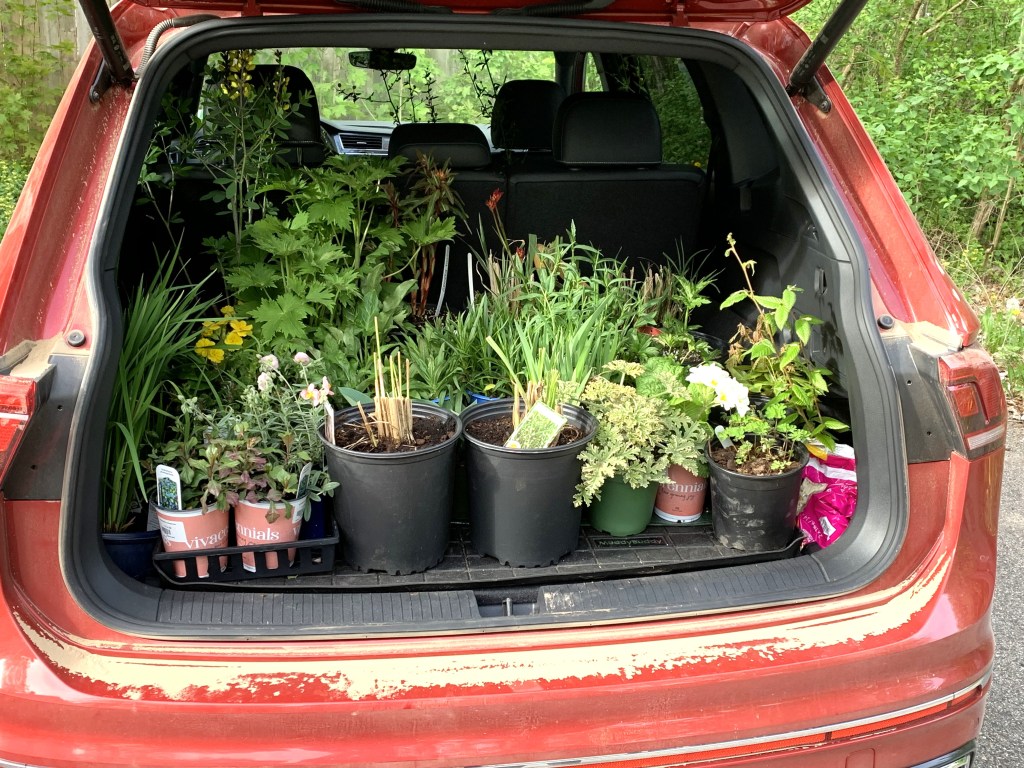
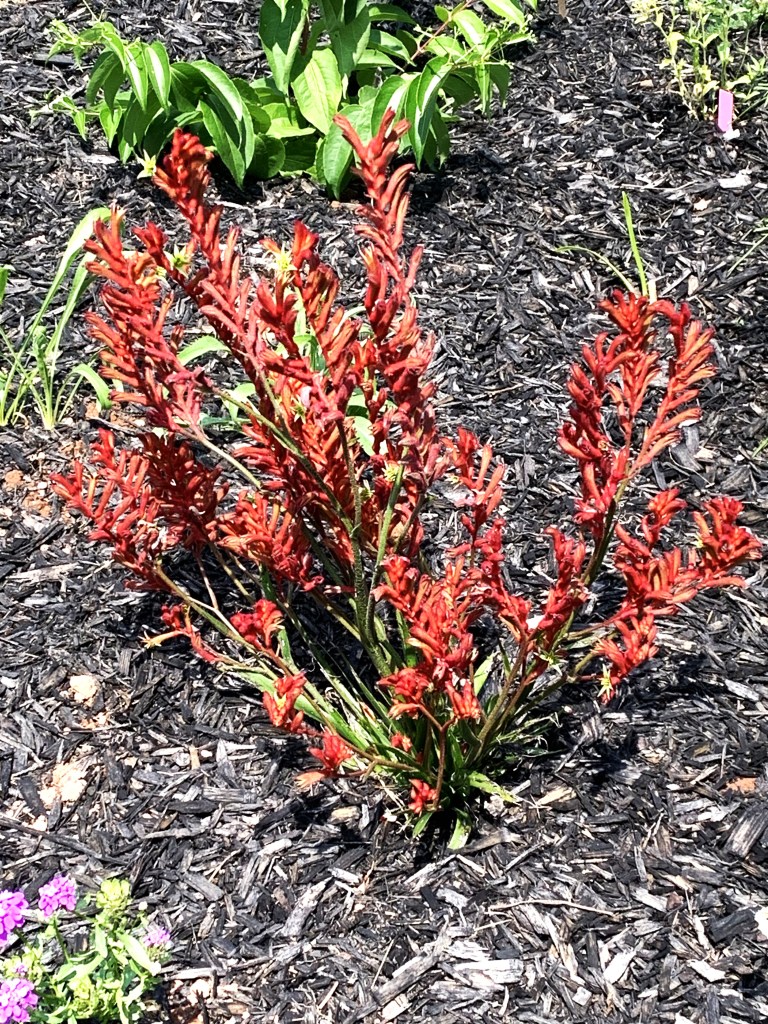
Victoria and I went on a plant-finding trip to Nova Scotia in May, hoping to find some interesting plants that might not be normally found on the Island and that we could add to what we felt were already magnificent borders. We stayed with a friend in the Annapolis Valley and had a wonderful time interspersing visits to garden centres to ones to vineyards. The wineries of the Grand Pre region are very good places to while away an hour or two! During our stay, we went to the famous Annapolis Royal Historic Gardens, which have a 40+ year history, and while there discovered that there was to be a sale of ‘Rare and Unusual Plants’ that weekend. Needless to say, the car was crammed full of plants when we eventually got back across the bridge. It was worth it, though – the Kangaroo Paw, a native to south-western Australia now 18,500 kms away from home, elicited a number of surprised comments.
In June the ladies of the Uigg-Kinross-Grandview had the idea of a Strawberry Social. “If you’ve got tables and chairs and a tent,” they said, “then we can set up and provide strawberry shortcake and cream on a by-donation basis. You don’t have to do anything.” Sure, I said.
Last Sunday afternoon we ended up with over a hundred people. One I have known since our first day at Teachers’ College, in September 1971. There were four from the UK, two from Australia, four from Calgary, one from Newfoundland, four from New Brunswick … and many, of course, from the Island. Together, they represented all six decades of our working life.
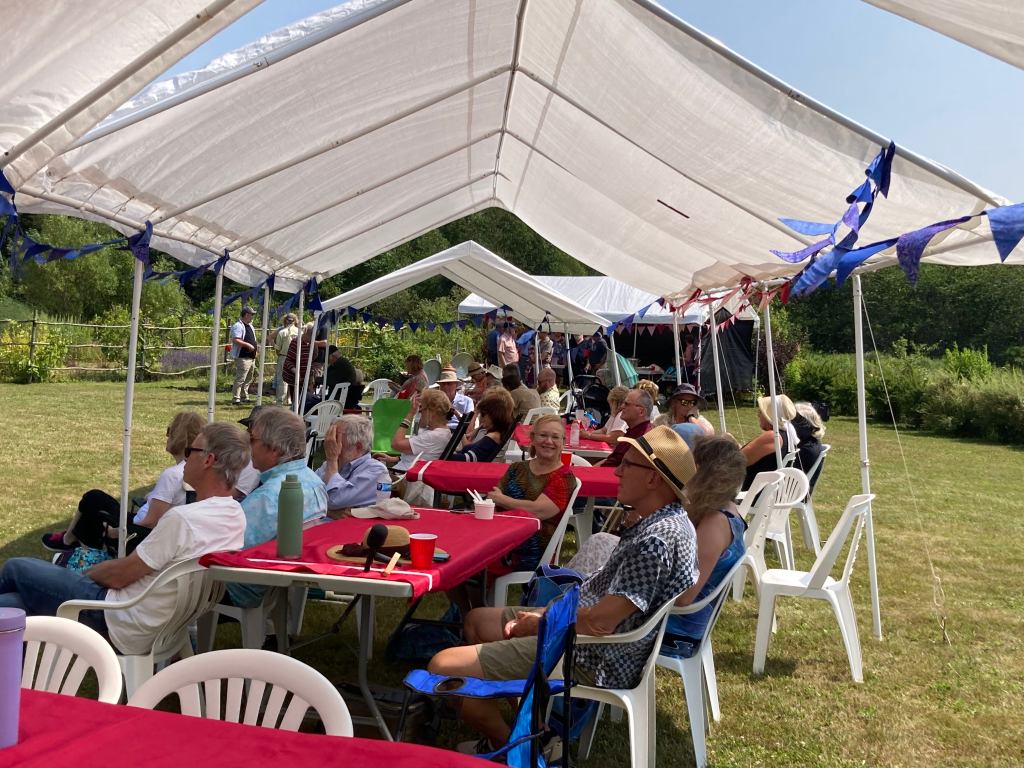
In addition to those friends from my college days of the 1970s, we had people with whom we taught in Papua New Guinea (1970s-80s) and in northern Canada and Baffin Island (1980s-90s). We had students and colleagues from St. Francis Xavier University (1990s), the University of Calgary (1990s-2000s), and the University of Prince Edward Island (2000s-2010s). There were close friends who worked with me on post-conflict education development projects in Kosovo (2001-2007) and Afghanistan (2011-2016), academic colleagues who were presidents of various scholarly organizations where I was an active member (BELMAS, UK, 2000s-2010s and CASEA, Canada, 1990s-2010s), and even a contemporary colleague from my current ‘interim’ gig at Yorkville University (2020s). All in all, a merry band, and we caught up on much gossip and memory.
And of course, there were those who could not come, but who sent reminiscences instead. My friend who reminded me about walking down the Corniche in Beirut while members of a celebratory parade marched past, firing AK-47s into the air. “Where do the bullets land,” we wondered, only to be soothed by the staccato rustle of metal hailstones falling upon the harbour. Or our friend who reminded me of adventures on the Sepik River, when we went looking for master carvers to undertake a project I had in mind. He furnished photographs!
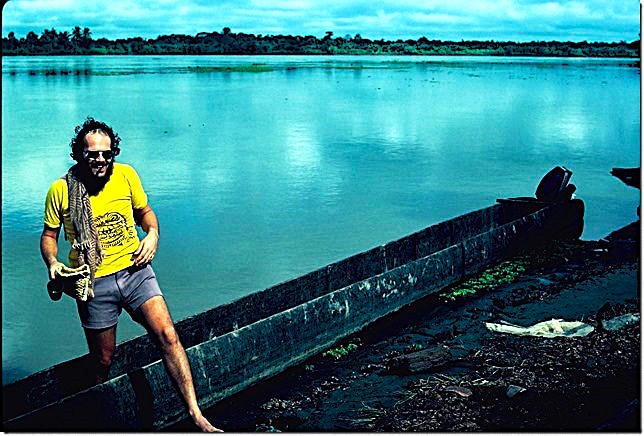
My colleagues and I have worked with senior educational leaders in provincial capitals across Canada and Sweden, and in national capitals such as Prishtina, Beirut, and Kabul, but most of our work has been in the hinterland. From remote Pacific island villages to First Nation, Métis and Inuit communities in northern Canada, from the Sámi towns of northern Sweden to Roma villages in the Balkans, from inner city Calgary to the industrial coast of Cape Breton, and in a variety of post-conflict environments where the degree of ‘post’ was perhaps less that one might like, we have worked in what we laughingly call ‘resource-challenged’ environments.
Through these experiences I have determined that educational leadership is not confined to the grand hallways walked by Princes. The dangers of centralized bureaucracies with an urban-centric worldview are well known and yet often ignored. My work in Prizren and Peja, in Baalbek and the Bekaa Valley, in Bamiyan and Balkh, was as important there as work in Souris or Tignish is here on PEI.
As the final notes of the last saxophone solo died away, a quiet came over the crowd, this disparate group of friends and colleagues who had come together to celebrate with us. Nobody wanted to go, it seemed, and new friends shook hands and promised to stay in touch. People came up to where I sat in my red Adirondack chair. “It was a lovely party,” they said, “everything was perfect, all experienced in one seamless afternoon of weather, music, flowers, food, and companionship.”
I smiled and graciously accepted their comments. Then a couple passed behind me, speaking clearly enough that I could hear.
“We should do one of these,” she said.
“Well, it can’t be that hard to organize,” he replied, “and your mother is coming back from Alberta in three weeks.”
Sprezzatura, indeed.
 J. Tim Goddard, PhD
Worth travelling for!
LikeLike