Well, it’s that time of the year again. The last summer concerts are taking place, the kids are all going back to school, and I’ve just spent the day making tomato paste.
This year we had a bountiful crop of tomatoes. There was a slight problem with the first ones, which developed the dreaded ‘blossom end rot’. This is a type of physiological disease that often hits fruits such as tomatoes and peppers – the end goes all icky and soft, then a big black scab appears, and the fruit (a) looks horrible and (b) is inedible.
We’ve put up with it in previous years, when there were only a few cases, but this year we had two new garden beds, and it seemed like all the crop was affected. What to do? Ask Uncle Google, of course. So, we did and discovered that the problem was probably a lack of calcium in the soil. We picked all the grungy tomatoes and threw them away because I didn’t want them anywhere near the compost pile. We spread a few handfuls of crushed calcium on the soil under the plants, watered it in, then waited and wondered. And it worked!
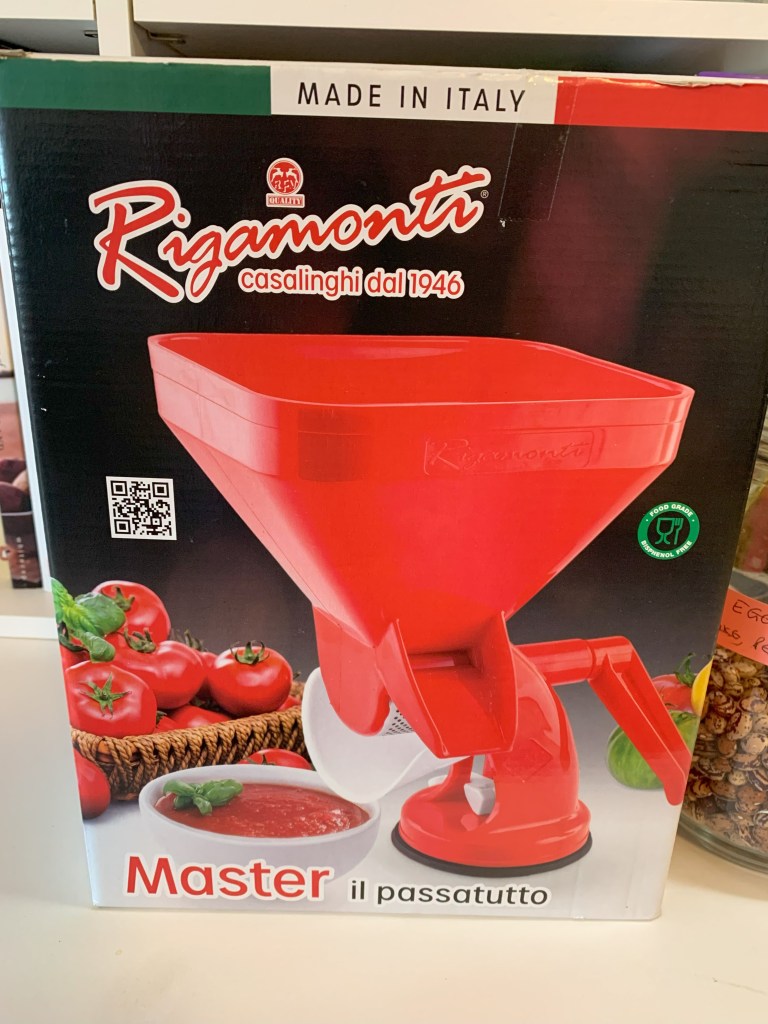
We had pretty close to a perfect summer this year, if you are a tomato; some rain early on and then long stretches of sunshine and low humidity. Inundated with tomatoes, we processed them through our dandy Italian tomato press to get rid of the skins and seeds. This isn’t a paid advertisement or a product placement or anything, but if you’re serious about making tomato sauce and the like, get yourself one of these or something similar. It’s so much easier than doing the ‘blanche in boiling water then dip in an ice bath before removing the skins’ thing.
At first, we just made sauce, and that was either bottled or frozen. But the tomatoes kept coming. Today we had a storm forecast, lots of wind and rain, so yesterday I picked as many tomatoes as I could. At the end of the day, there were over 20 pounds of fruit in our trays.
The green ones I separated out and gave to a neighbour, who will make chow with them. Chow is one of those weird Maritime foods—basically green tomatoes, onions, sugar, salt, and vinegar, plus a few spices. The actual amounts and combinations of ingredients are closely guarded family secrets. If you know somebody who “makes good chow”, you keep that friendship strong, especially in the early fall.
Personally, I think the folks round here became so used to hurricanes and early frosts interrupting the harvest that they had to figure out what to do with all the unripe tomatoes. Chow is one of those foods that basically lasts forever in the pantry and can add a bit of colour to pretty much any main course. As well as an eye watering taste. But hey, to each their own. I grew up on piccalilli, which looks like it should have one of those propellor shaped ‘caution—radioactive’ signs on the label, so who am I to judge? In a week or so we’ll get a jar or two, and that’s enough to keep us in chow for the winter.
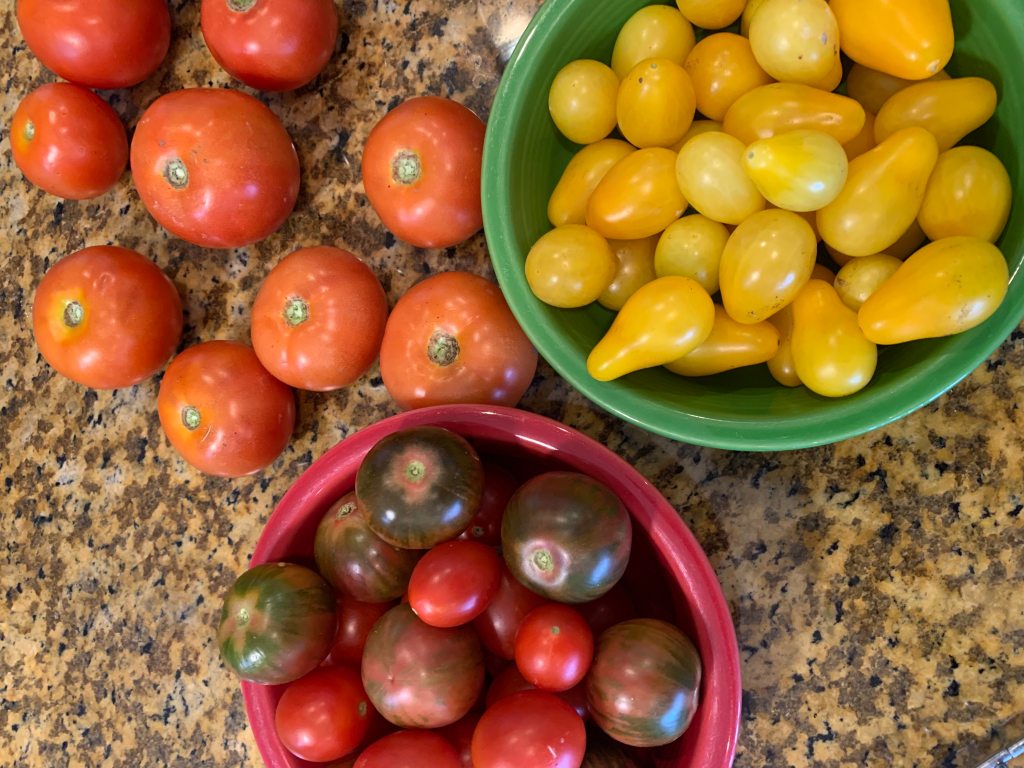
The ripe tomatoes I kept, adding them to the ones already in the fridge. We grow various types of heirloom tomatoes, and the fruit is as multicoloured as you would expect. We have Yellow Pear and Black Vernissage, Orange Jazz and Pink Fang, Grightmire’s Pride and Reisentraube. And of course, the Italian reds, things like Martino’s Roma and Costoluto Genovese, Principe Borghese, and A Grappaoli d’Inverno.
If you want to find cool new varieties, check out the Whole Seed Catalog from Baker Creek.
Sorry about the spelling—they’re American.
This year we planted 120 seeds, eight each of fifteen different varieties. We estimated a germination rate of 50% and a survival to maturity rate of about the same; we thought 30 plants would be sufficient. As it happened, our germination rate was 80% and our survival rate was 75%. Hence the need for the two new garden beds. 72 tomato plants take up a lot of room.
I know that you are supposed to thin out the plants and throw away the weaker ones, but I can never bring myself to do that. I’m lucky that I have lots of room in the garden, so I just dig another bed. The little ones always reward me with a few fruit, even if they’re not quite as vigorous as the other plants.
This morning, we took all the tomatoes and set up a production line. First, we put a dozen or so in a saucepan and par-boiled them, about 5 or 6 minutes at a time. Then I use a slotted spoon to lift them out and put them through the press, whole. The seeds and skins are magically separated from the pulp, and the sauce is collected. This was repeated and the whole process took us an hour. Did I mention, we had a lot of tomatoes!
I put 5 litres (1.3 US gallons, 8.8 Imperial pints) of the sauce into a large saucepan and the rest into plastic freezer bags. There were 15 cups left over, so now we have another five bags of tomato sauce to accompany pasta dishes over the winter months. The big saucepan was left to simmer on the stove. For 6 hours.
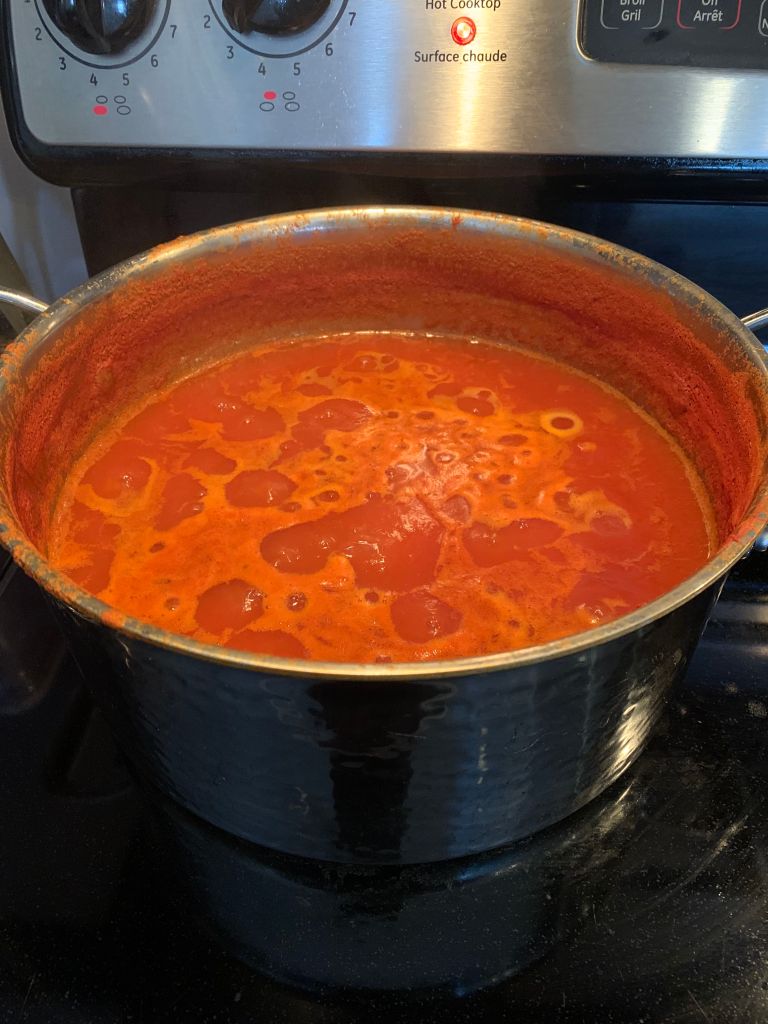
I had some lunch and watched the football (soccer). It’s an international break from the club games, something called the League of Nations, and England beat the Republic of Ireland 2-0. Victoria came for lunch and beat me at Scrabble. No surprise at either of those results. People from the cruise ships put on silly clear plastic ponchos and rode up and down Queen Street in the back of a horse-drawn wagon. Just a normal quiet and rainy Saturday on the Island. Every so often I got up and stirred the pot until it had reduced to about a litre of thick mush. I spread this on a baking sheet and put it in the oven for half an hour, to bake at a low temperature.
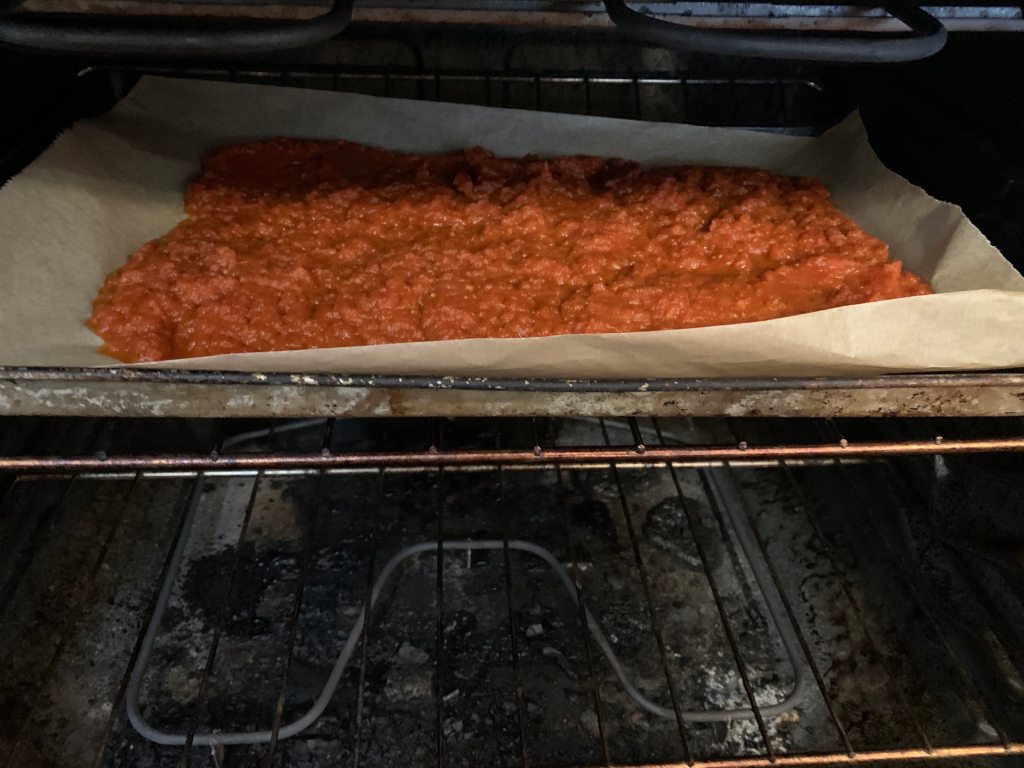
After it had cooled, I put good sized dollops onto a second baking sheet lined with parchment paper and stuck them in the freezer.
I had a taste, of course. There is an intense flavour to concentrated tomato sauce or paste. That’s why it’s so expensive, when you buy it in those little jars or the easier-to-use tubes in the supermarket. You don’t need much to enhance a meal, and we’ve found that even a bit of a dollop is usually enough. Some people use ice-cube trays but to me that always seems too formal for what is essentially a country food. I’d rather defrost one and use what I nee—it keeps in the fridge for four or five days.
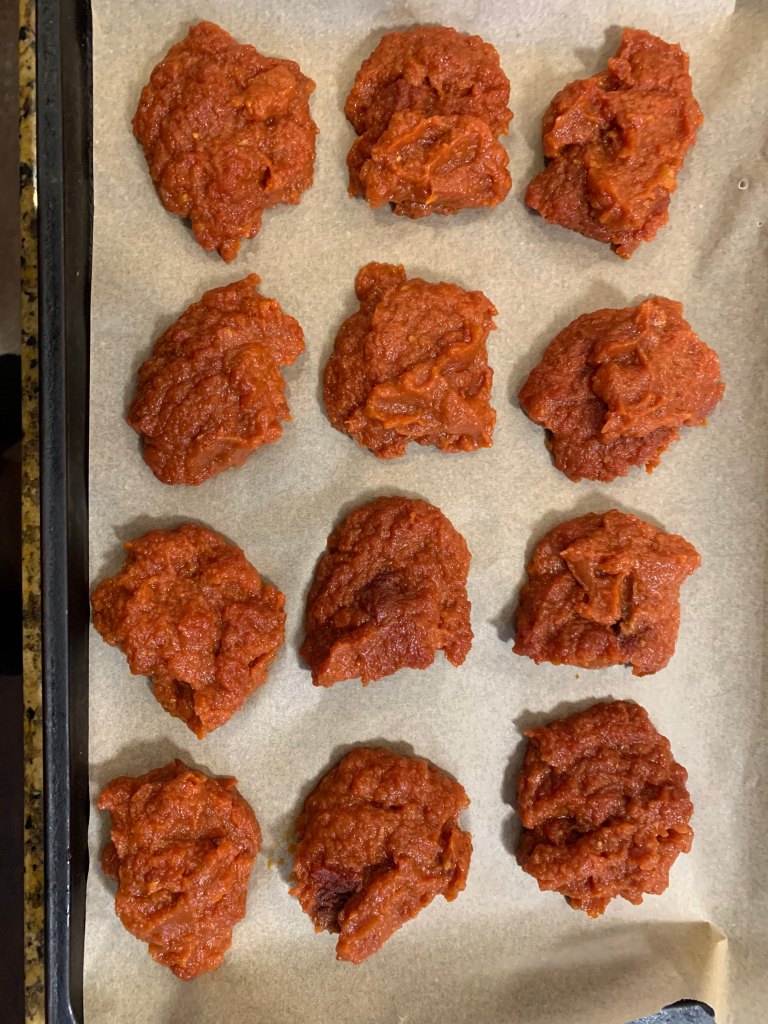
Tomorrow, I’ll collect my dollops into a couple of freezer bags, for storage. Whenever we have a need for tomato paste during the winter, we’ll pull out a dollop and defrost it.
And remember the summer.
 J. Tim Goddard, PhD
Holy tomato!!! Have you thought of opening a stall
LikeLike